The Broken Control Loop: How AI Export Controls Move the Off Switch
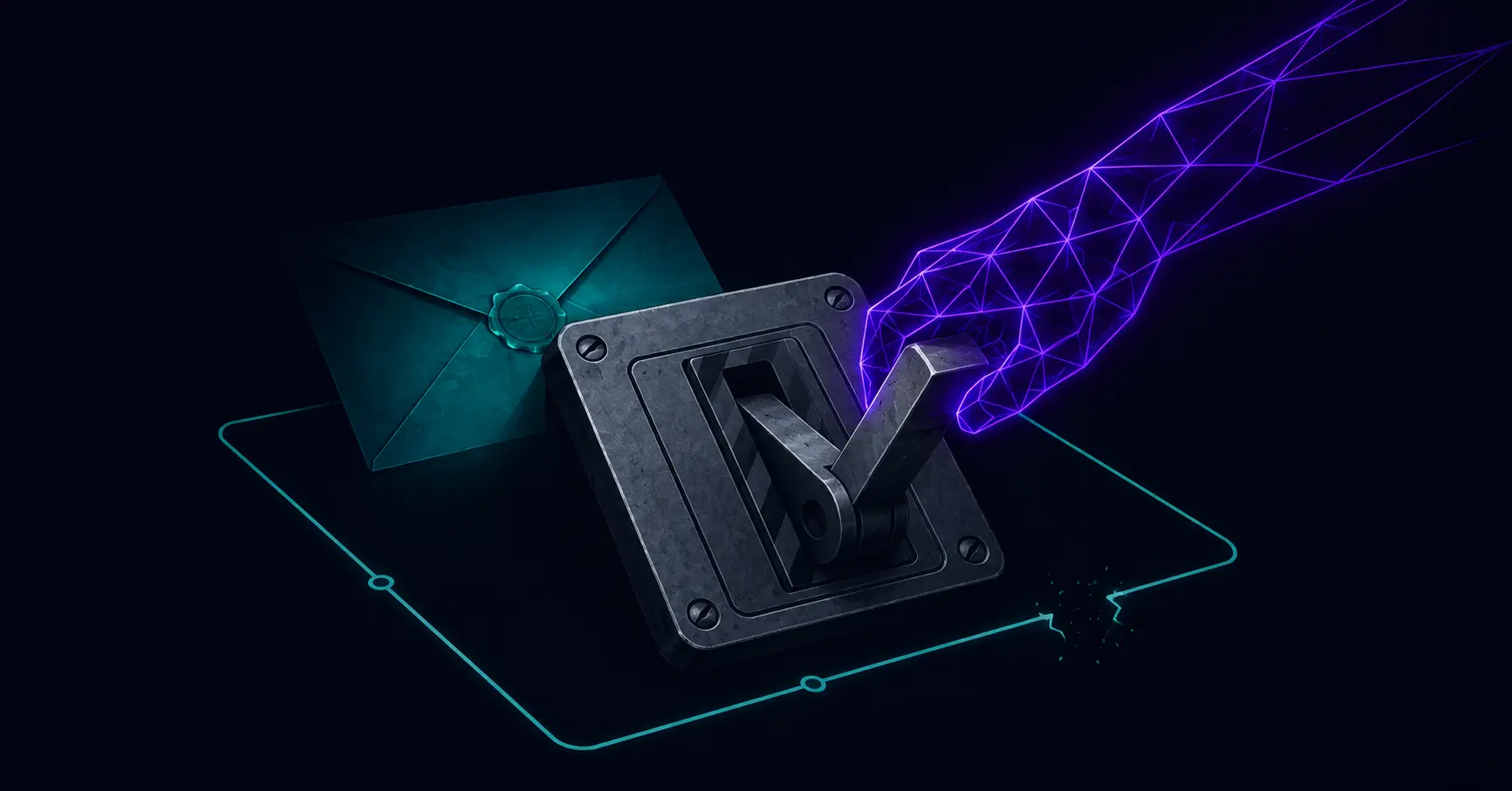
HACHuman + AII have seen enough enforcement infrastructure to know the difference between a control and a gesture towards one. A control has a trigger, a record, a decision path and someone who can be asked why the switch moved. A process that works only because two interested parties say it works is something else. That is the problem with the Fable and Mythos suspension. The point is not whether Anthropic is innocent, or whether the government is overreaching, because the public record does not carry enough weight to decide either. The point is colder than that. A live frontier model was pulled from use, the stated reason sits mostly behind sealed doors, and the company’s answer is still the company marking its own paper. When the US government can move an AI product's off switch outside the developer's own control, and the public record shows only the government's assertion on one side and the company's self-certification on the other, the failure is no longer just a commercial control loop breaking under pressure; it is the control loop being displaced by external power without visible evidence.
The off switch moved
On 12 June 2026, Commerce Secretary Howard Lutnick sent a letter to Anthropic chief executive Dario Amodei placing Fable 5 and Mythos 5 under AI export controls, barring their use by any foreign national inside or outside the United States, and Anthropic disabled both models for every customer within hours (Fortune, Jun 2026; NBC News, Jun 2026). Verified The order made partial compliance impossible: Anthropic cannot separate foreign nationals from the rest of its user base in real time, and the restriction reached even the company's own non-citizen staff, so a worldwide shutdown was the only route to compliance (StartupHub, Jun 2026). Verified Three days earlier the same two models had launched as the most capable Anthropic had shipped, Fable 5 sold as the first Mythos-class model built for the general public (Axios, Jun 2026; VentureBeat, Jun 2026). Verified
What changed in those three days was not the model. It was who decided whether the model could run.
The mechanism this site calls the Broken Control Loop usually shows up in its commercial form, where a safety posture bends because growth or a launch date pushes against it. The Fable suspension is that mechanism with a different hand on the switch. The pressure is not the market but the state, using export-control authority to reverse a deployment the developer had already chosen, and reporting describes it as the first time a leading AI company has taken a publicly deployed model offline at the federal government's instruction (NBC News, Jun 2026). Probable
The restraint it chose, and the one it didn't
Anthropic spent the spring building a reputation on doing voluntarily what the government has now forced. In April it held its Mythos-class capability back, releasing Mythos Preview only to a closed group of cyber defenders and infrastructure providers under Project Glasswing, on the stated logic that the capability was too dangerous to open up until the safeguards caught up (Anthropic, Jun 2026; Yahoo Finance, Jun 2026). Verified When it went public on 9 June it wrapped the same underlying model in safeguards that route high-risk cyber, biology, and chemistry queries to the weaker Opus 4.8, and it imposed mandatory 30-day data retention on Mythos-class business users to monitor for misuse, a measure it concedes carries real cost with customers (VentureBeat, Jun 2026; Anthropic, Jun 2026). Verified
The restraint was Anthropic's to design. The off switch was not.
The case for the export controls
The strongest version of the government's position does not need the jailbreak to be severe. An administration official told Axios that Commerce acted after another company claimed it could jailbreak Mythos, that the administration had already asked Anthropic to delay the release and been refused, and that the models should stay locked until the government's own defences are hardened, possibly within weeks (Axios, Jun 2026). Unverified On that account the suspension is not an ambush but a regulator reaching for the one binding tool it had — AI export controls — after a voluntary request failed, against a frontier cyber model its developer shipped over the government's stated objection. Mythos 5 scored 78% on the ExploitBench benchmark against 40% for Opus 4.8, and the public release landed a week after Anthropic filed for an IPO at a reported $965 billion valuation (the-decoder, Jun 2026; Quartz, Jun 2026). Probable
It is a real argument, and it cuts against reading Anthropic as the simple victim. A company that asks to be trusted with the world's strongest cybersecurity model, then declines a request to wait, has chosen the ground it now stands on.
What the argument does not do is show its work. The administration has put no technical evidence on the public record, and its reasoning reaches the public through an anonymous official and a letter that, by Anthropic's account, named no specific concern at all (StartupHub, Jun 2026). Verified
Neither side has shown the artifact
Anthropic's defence is detailed and entirely its own. The company says the jailbreak is narrow rather than universal, that it amounts to asking the model to read a codebase and identify software flaws, that the same capability is available from other deployed models including OpenAI's GPT-5.5, and that no disclosed bypass has produced a harmful result (Anthropic, Jun 2026; Fortune, Jun 2026). Probable Each of those claims may be correct. None can be checked from outside. They are the assessment of the party with the most to lose from the suspension, delivered while it is mid-IPO and already fighting this same government in court over an earlier supply-chain-risk designation (CNBC, Jun 2026). Verified
The public is left to adjudicate a cybersecurity dispute in which the government will not show the threat and the company grades its own homework. The artifact at the centre of it — the jailbreak, the demonstration, the report Anthropic says it reviewed — sits in private on both sides. The same administration that built a pre-deployment testing partnership with Anthropic through Commerce's own standards body is now using export authority to pull the model, and the test results that would settle whether the directive is proportionate are not in the record either (Axios, Jun 2026). Probable
This is not the first time in this library that the decisive evidence in an Anthropic case has stayed inside the room. The Pentagon dispute and Project Glasswing turned on documents the public never saw. The pattern is not that Anthropic behaves worse than its rivals. The pattern is that the decisions which most shape what these models are allowed to do keep happening where no one outside the contract can watch.
The Fable suspension shows a control loop that has left the developer's hands, with no public record strong enough to prove that the hands now holding it are using it well.
QUESTIONS
Can the US government shut down an AI model?
Yes. In June 2026 the US Commerce Department used export-control authority to bar Anthropic from making Fable 5 and Mythos 5 available to any foreign national, which forced Anthropic to disable both models for every customer worldwide. Reporting describes it as the first time a leading AI company took a publicly deployed model offline at the federal government's instruction.
What are AI export controls?
AI export controls are government orders that restrict who may access a given AI model, on national-security grounds. They can apply by destination and by nationality, including foreign nationals inside the issuing country. Because a provider cannot always separate those users in real time, an export control on a model can mean a full shutdown rather than a partial one.
Why did Anthropic disable Fable 5 and Mythos 5?
Anthropic disabled both models to comply with a Commerce Department directive citing national-security authorities. The company says the order rests on a narrow jailbreak finding it considers minor and available from other deployed models, and that it is working to restore access. The government has not put its technical evidence on the public record.
What is the Broken Control Loop?
The Broken Control Loop is the pattern in which the decision over what an AI system is allowed to do moves outside the developer that built it. It usually appears as commercial pressure overriding a safety posture. The Fable and Mythos suspension is the same mechanism driven by state power rather than the market.